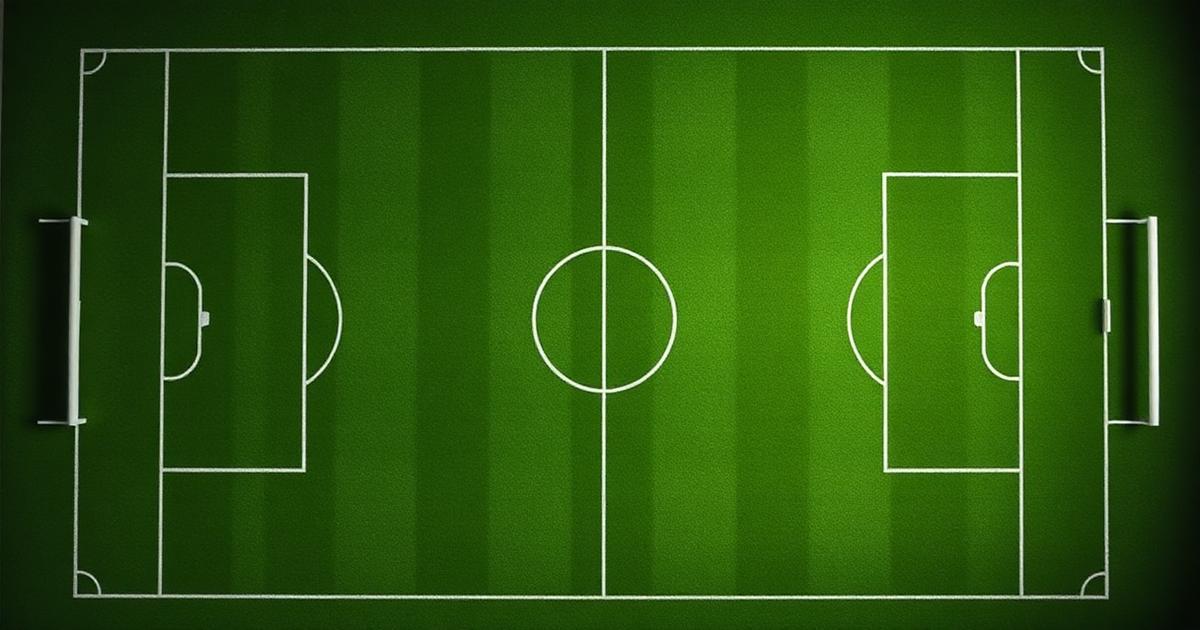
Who writes the rules
The Laws of the Game are maintained by the International Football Association Board (IFAB), founded in 1886 and jointly controlled by FIFA and the four British associations (England, Scotland, Wales and Northern Ireland). FIFA has four of the eight votes on IFAB; the British associations share the other four. Any change requires a three-quarters majority, meaning FIFA cannot unilaterally rewrite the laws.
The 17 laws at a glance
1. The Field of Play. 2. The Ball. 3. The Players. 4. The Players' Equipment. 5. The Referee. 6. The Other Match Officials. 7. The Duration of the Match. 8. The Start and Restart of Play. 9. The Ball In and Out of Play. 10. Determining the Outcome of a Match. 11. Offside. 12. Fouls and Misconduct. 13. Free Kicks. 14. The Penalty Kick. 15. The Throw-in. 16. The Goal Kick. 17. The Corner Kick.
Every competitive match in the world is officiated under these 17 sections. IFAB publishes an annual update each summer.
Fouls and misconduct (Law 12)
Law 12 defines the direct free-kick offences (kicking, tripping, holding, pushing, handballing among others), indirect free-kick offences (dangerous play, impeding, encroachment) and the misconduct offences that carry a yellow or red card. Understanding Law 12 is the difference between reading a match and shouting at the referee — the difference between a caution and a red card is often 'reckless' versus 'excessive force', which is a matter of intensity, not intent.
The handball law
One of the most rewritten sections of the modern era. As of 2023, a handball offence occurs when a player deliberately touches the ball with the hand or arm, or when the ball touches an arm in an unnaturally raised position that makes the body bigger. Accidental contact by an attacker leading directly to a goal or goalscoring opportunity is also punished; accidental contact by a defender in the buildup to a goal is not. This asymmetry is deliberate — IFAB wants to reduce lottery goals from accidental handball earlier in a move.
The advantage rule
Law 5 allows the referee to play advantage instead of stopping play for a foul, if the attacking team retains a clear opportunity. If the advantage does not materialise within a few seconds, the referee brings play back and awards the original free kick. This is one of the great judgement calls in officiating: play advantage too aggressively and the fouled team suffers; play it too little and matches become choppy.
Substitutions and concussion protocols
Since 2022 competitive matches may use five substitutions, with three stoppages plus half-time. Concussion substitutions — an additional permanent substitution when a player is suspected of concussion, plus a like-for-like replacement for the opposing team — are used in most major competitions as part of an IFAB trial that is likely to become permanent.
Recent and ongoing changes
Recent changes include stricter enforcement of goalkeepers holding the ball (a countdown timer to eight seconds triggers a corner if exceeded), tougher penalties for team officials on the technical area, and expansion of semi-automated offside. Under trial: 'football video support' as a lighter-touch VAR alternative, and Arsène Wenger's proposal to declare an attacker onside if any legal body part is level with the defender.
How to follow the rules as they change
IFAB publishes the annual Laws of the Game as a free PDF each June, along with a 'changes and clarifications' document that explains what is different from the previous edition. Referees' associations produce short summary videos each summer. Following those two sources is the most reliable way to stay current — social-media rumours about rule changes are frequently wrong.
Free-kick offences at a glance
| Offence | Free kick | Card | |---|---|---| | Careless foul | Direct | None | | Reckless foul | Direct | Yellow | | Excessive-force foul | Direct | Red | | Handball (deliberate or unnatural body) | Direct | Yellow if promising attack denied | | Denying a goalscoring opportunity | Direct | Red | | Dangerous play (no contact) | Indirect | Usually none | | Impeding an opponent | Indirect | Usually none | | Goalkeeper holding ball longer than 8 seconds | Corner (from 2025) | None |
Refereeing at elite level relies on distinguishing careless from reckless and reckless from excessive force. Every centimetre of that spectrum matters — the same tackle at three different intensities produces no card, a yellow or a red.
IFAB's recent rewrites
Since 2018, IFAB has rewritten the handball law three times, changed the drop-ball procedure, introduced concussion substitutions, formalised VAR, tightened penalty-kick rules on goalkeeper movement, and — in the 2025 update — replaced the six-second goalkeeper limit with an eight-second countdown and a corner as the sanction. Each change was in response to specific in-game problems: unnatural handballs deciding matches, drop-ball contested restarts leading to injuries, concussion protocols being ignored under pressure.
The underlying philosophy is small, testable changes rather than sweeping reform.
Common misconceptions
- The ball does not have to be entirely over the line for a goal to be awarded; a goal is scored when the whole of the ball crosses the whole of the goal line. Goal-line technology confirms this to the millimetre.
- A defender does not have to touch the ball to be beaten offside — being nearer the goal line than the second-last defender at the moment the pass is played is enough (see the offside rule guide).
- Advantage does not have to be signalled with the outstretched arms alone; a referee can play advantage silently and only signal it after the fact.
Related reading
Historical background
The Laws of the Game date to the founding of the Football Association in 1863. The original 14 laws were agreed at a series of meetings at the Freemasons' Tavern in London, and they codified football as a game played only with the feet — separating it from the running-with-the-ball rugby codes. The International Football Association Board was formed in 1886 to standardise the laws internationally, which is why the four British associations retain permanent seats.
The number of Laws has been 17 since 1938. The wording changes constantly — IFAB now publishes an annual update every June — but the structure has held for nearly 90 years.
Real-world examples
The 2019 Champions League final handball. Moussa Sissoko was penalised in the second minute for a handball as Sadio Mané's cross struck his arm. Under the 2019 rewrite of the handball law, an arm 'unnaturally raised' constitutes an offence regardless of intent. Mohamed Salah scored the penalty and Liverpool won 2-0. The decision would probably not be a penalty under the 2023 rewrite, which reintroduced more emphasis on whether the arm made the body 'unnaturally bigger' in a way relevant to the play.
The Harry Kane offside VAR call, 2024. A goal ruled out for a toenail offside prompted broadcaster discussion about the Wenger proposal to make attackers onside if any part of their body is level with the defender. The rule was applied correctly under Law 11 as it stands; the debate is about whether the Law should change.
Related reading
Frequently asked questions
- Who writes the Laws of the Game?
- The International Football Association Board (IFAB), a body jointly controlled by FIFA and the four British football associations. Changes require a three-quarters majority.
- How many Laws of the Game are there?
- There are 17 Laws, covering everything from the field of play and the ball to fouls, offside and the restarting of play.
- How many substitutions are allowed in football?
- Most competitive matches now allow five substitutions per team, made in a maximum of three stoppages plus half-time. Concussion substitutions may be permitted in addition, depending on the competition.
- Can a goalkeeper be sent off for holding the ball too long?
- No. Under the 2025 Law update, a goalkeeper who holds the ball for more than eight seconds concedes a corner kick to the opposing team, not a card.
- Who can propose changes to the Laws of the Game?
- Any of the eight IFAB members — FIFA and the four British associations — can propose changes. Proposals are debated at the Annual Business Meeting each January and approved (or rejected) at the Annual General Meeting each March.